3 years
Tennessee: unclaimed bank money and where to complain
A Tennessee deposit account with no owner activity for three years can be reported to the state Treasury, which holds the money for you. Here is how to look, and who takes complaints about a bank or credit union.
By HonestRudder Editorial Team Updated 4 min read
- Dormancy for checking and savings
- 3 years
- Who holds the money
- The state Treasury
- Bank and credit union complaints
- Financial Institutions
In short
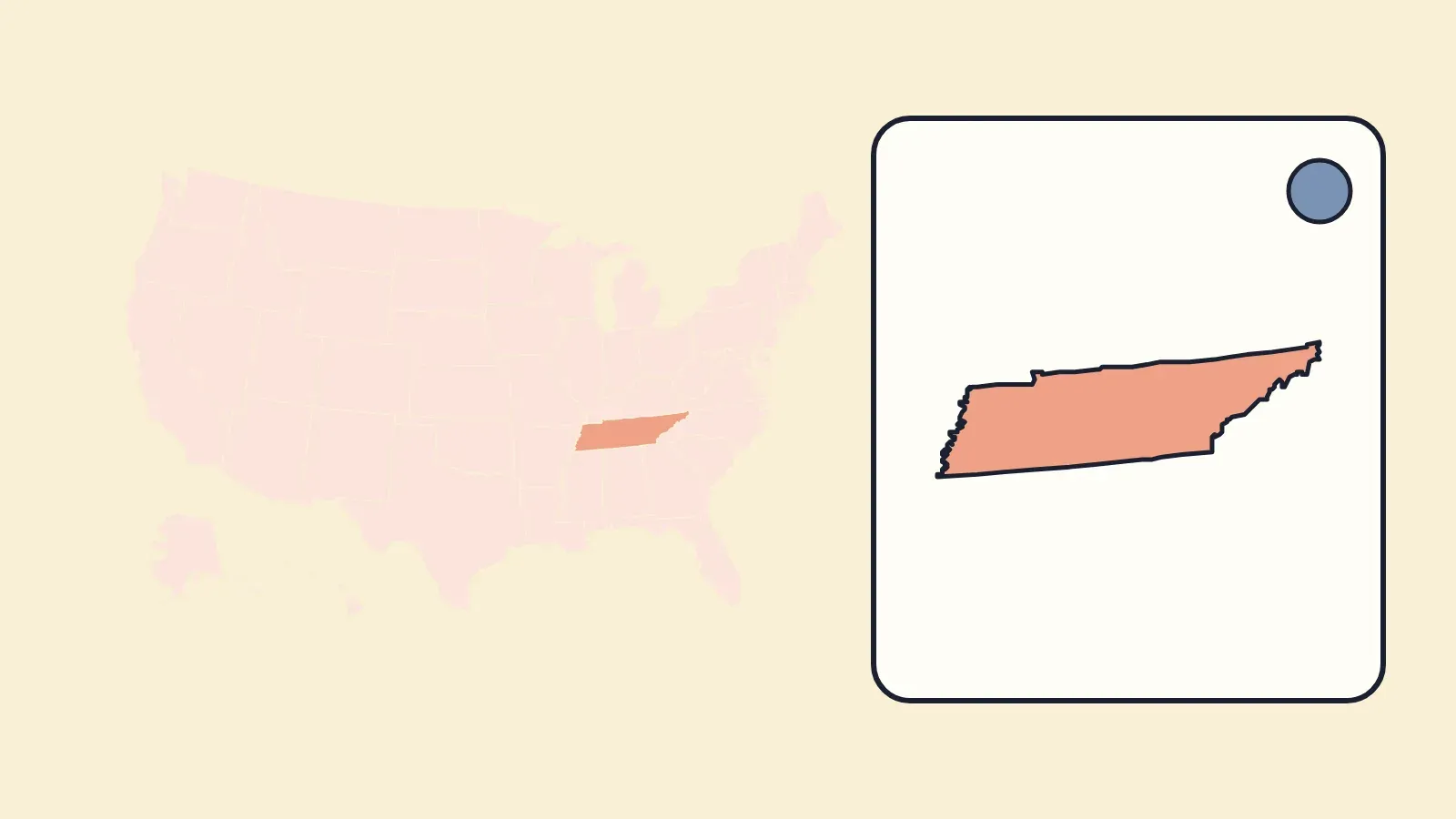
In Tennessee, a demand, savings or time deposit is presumed abandoned three years after the earlier of its maturity or the owner's last activity, under Tenn. Code Ann. 66-29-105. The money goes to the Department of Treasury, and you can search for it for free at ClaimItTN.gov. The Department of Financial Institutions takes complaints about state-chartered banks and credit unions. Federally chartered institutions answer to federal regulators instead.
Tennessee at a glance
How a dormant account becomes unclaimed property
Tennessee's Uniform Unclaimed Property Act sets the rule for deposits in section 66-29-105(a)(5). A payroll card, or a demand, savings or time deposit, is presumed abandoned three years after the earlier of its maturity or the date of the owner's last indication of interest in it. The statute says "demand" rather than "checking." The National Association of State Treasurers (NAUPA) lists three years for checking, savings and certificates of deposit in Tennessee.
Section 66-29-113 lists what counts as an indication of interest. A written record you sent the bank counts. So does an oral contact, if the bank made and kept a record of it at the time. Deposits into or withdrawals from the account count, including automatic ones you set up earlier, but not an automatic reinvestment of interest. So do accessing the account or its information, and instructing a change to it.
Finding and claiming your money
- Search by name. Go to ClaimItTN.gov, which leads to the Treasury's unclaimed property search. The Treasury calls it a free service. Search each name you have used, including a maiden name and any business name.
- File a claim. If you find a match, you can file on the website. The Treasury says claim filing has no fees.
- Check on it. The Treasury's claims portal lets you check a claim and upload documents.
- Call if you are stuck. The Unclaimed Property Division's claims team is at 866-370-9429.
Because the Treasury says searching and filing are free, a company that asks for a fee up front to do them for you deserves questions before you pay.
Who handles bank and credit union complaints
The Tennessee Department of Financial Institutions says it regulates banks, credit unions and trust companies. Its main page links to a "File a Complaint" page, and its phone number is 615-741-2236. A national bank answers to the Office of the Comptroller of the Currency, and a federal credit union to the National Credit Union Administration, so check which charter you have. Your account agreement or the institution's website says.
The Attorney General's Division of Consumer Affairs runs an informal complaint mediation program, in which you and the business exchange written responses. Its page says the division cannot force a business to fix your problem and that neither it nor the Attorney General's Office can give legal advice or represent private individuals. For legal help, the page suggests a private attorney or a local legal aid office. For the federal route, see how to file a complaint with the CFPB and your state.
State-chartered bank or credit union
Department of Financial Institutions, 615-741-2236. Use its File a Complaint page.
Business, practice or scam
Attorney General, Division of Consumer Affairs. File online; status line 615-741-4737.
Federal charter
National banks go to the OCC. Federal credit unions go to the NCUA.
What this means in practice
- Make one deposit, withdrawal or login on each account at least once every three years, and keep any written contact with the bank.
- Update your address with every bank, so it can reach you before it has to report the account.
- If a fee has drained a dormant account to zero, read the fee schedule and think about closing the account. See closing a bank account.
- To check whether a deposit is insured at a bank or credit union, see FDIC and NCUA deposit insurance.
Common questions
How long before a Tennessee bank account counts as abandoned?
Three years after the earlier of maturity or the owner's last indication of interest, for a demand, savings or time deposit, under Tenn. Code Ann. 66-29-105.
Where do I search for money Tennessee is holding?
ClaimItTN.gov, run by the Tennessee Department of Treasury. The Treasury calls searching a free service. The claims team's number is 866-370-9429.
Can the Attorney General's office represent me in a dispute with a business?
No. The Division of Consumer Affairs says neither it nor the Attorney General's Office can give legal advice or represent private individuals. It offers an informal mediation program.
Sources
- Tennessee Department of Treasury, Find Your Missing Money
- NAUPA (National Association of State Treasurers), Tennessee dormancy periods
- Tenn. Code Ann. 66-29-105, presumption of abandonment (2018 code)
- Tenn. Code Ann. 66-29-113, indication of apparent owner's interest (2018 code)
- Tennessee Department of Financial Institutions
- Tennessee Attorney General, File a complaint (Division of Consumer Affairs)
Facts on this page were checked against these sources on November 21, 2026. The text of sections 66-29-105 and 66-29-113 comes from the 2018 version of the code on a public legal database, and NAUPA's current listing agrees on three years, so check the current code before you rely on a date.
Related reading
-

Account guide
Closing a bank account
How to close an account cleanly: new account first, direct deposits moved, autopays stopped and pending items cleared.
-

Rights guide
How to file a complaint
Which agency takes a bank or credit union complaint, how the CFPB process works and what to expect.
-

Account guide
FDIC and NCUA deposit insurance
What the $250,000 limit covers, how ownership categories add up and how to check that an institution is insured.