5 years
Alaska: unclaimed bank money and where to complain
In Alaska a savings or demand deposit with no owner contact for five years can be turned over to the state, which is longer than in most states. Here is how to look, and where to take a complaint about a bank or credit union.
By HonestRudder Editorial Team Updated 3 min read
- Dormancy for checking and savings
- 5 years
- Who holds the money
- The Treasury Division
- State banks and credit unions
- One state division
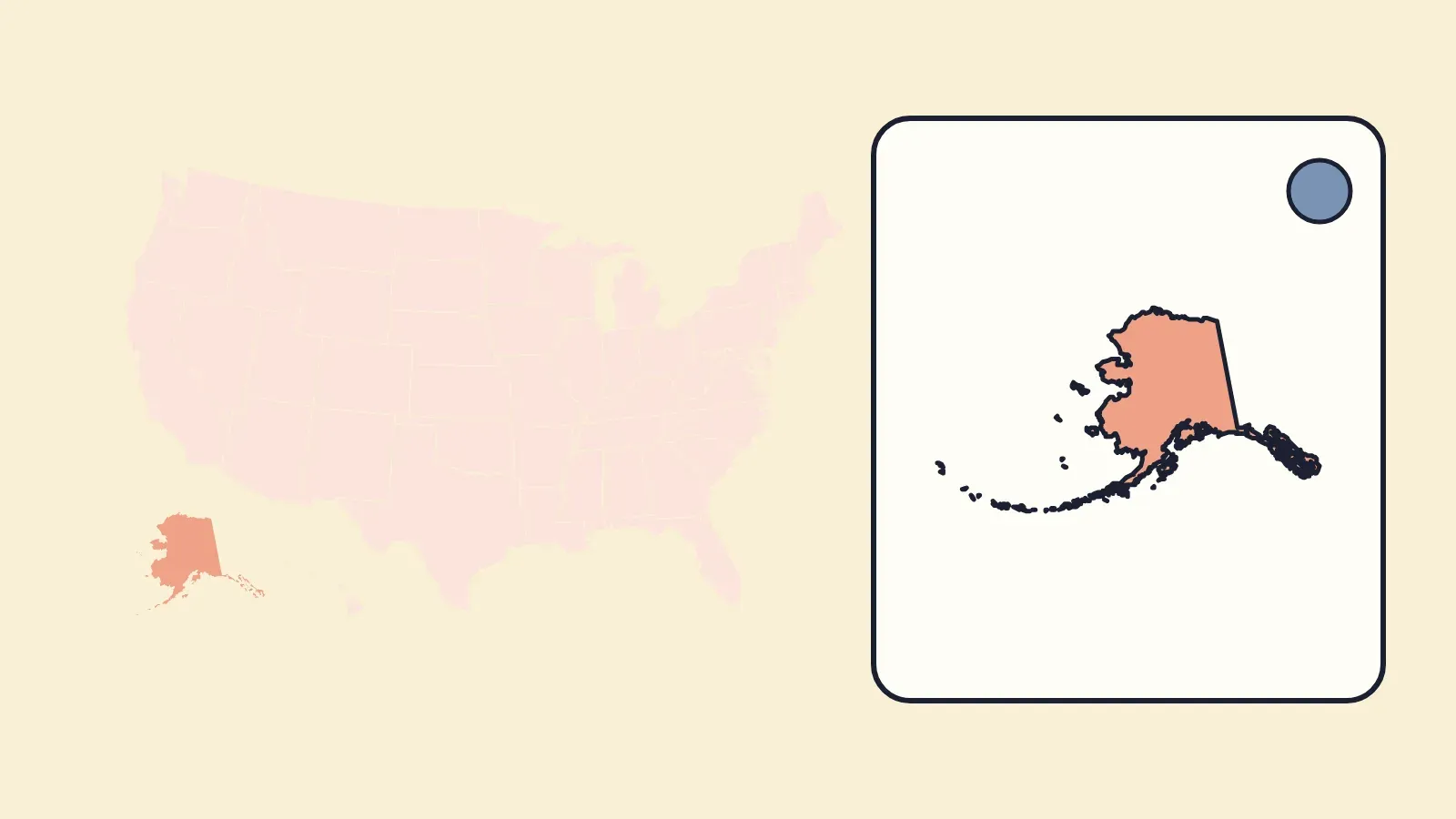
In short
In Alaska, a demand, savings or matured time deposit is presumed abandoned when the owner has had no contact with the bank for five years, and the bank reports it to the Department of Revenue's Treasury Division. The money stays claimable: search at unclaimedproperty.alaska.gov. Complaints about a state-chartered bank or credit union go to the Division of Banking and Securities. Federally chartered institutions answer to federal regulators instead.
Alaska at a glance
How money from a dormant account reaches the state
Alaska's unclaimed property law is Chapter 45 of Title 34 of the Alaska Statutes. Under AS 34.45.160, a demand, savings or matured time deposit at a bank or other financial organization is presumed abandoned unless, within the preceding five years, the owner did one of three things: changed the balance or presented a passbook so interest could be credited, corresponded in writing with the institution about the account, or otherwise showed interest in it in a way the institution recorded in a memo or file by one of its employees.
Five years is the number to remember for a bank account. It is not the state's default. The general rule in AS 34.45.110 is three years for intangible property that has stayed unclaimed after it became payable, and the National Association of State Treasurers' reporting page for Alaska also lists five years for checking, savings and certificates of deposit.
Finding and claiming your money
- Search by name. Go to unclaimedproperty.alaska.gov and search each name you have used, including a maiden name and any business name. Try former addresses too.
- Start the claim. Follow the site's instructions for the property you found. Expect to prove who you are, and to show a link to the property if it belonged to someone else.
- Ask for help by phone. NAUPA lists the Unclaimed Property Division at 907-465-5885. Confirm the number on the state's own site before you call.
- Never pay to claim your own money. Be wary of anyone who asks for a fee up front to find property the state holds for you. Use the official site.
You can also search nationally at missingmoney.com, a tool from the National Association of Unclaimed Property Administrators, but the claim itself goes through the state that holds the property. If the money belonged to someone who has died, expect the state to ask for proof of your relationship.
Who handles bank and credit union complaints
Which office hears a complaint depends on who chartered the institution. The Alaska Division of Banking and Securities, part of the Department of Commerce, Community, and Economic Development, regulates state financial institutions and says its staff investigate and resolve complaints. You file with its complaint form. Its toll-free number is 888-925-2521, with Anchorage and Juneau lines at 907-269-8140 and 907-465-2521. A national bank answers to the Office of the Comptroller of the Currency, and a federal credit union to the National Credit Union Administration. Your account agreement or the institution's website says which it is.
The Attorney General's Consumer Protection Unit takes complaints about businesses at 907-269-5200, or 888-576-2529 outside Anchorage. Its page says the unit often resolves disputes by notifying the business and using informal mediation, but that its main goal is to find business practices that may harm consumers, and it cannot investigate every complaint. It does not provide legal representation or legal advice, and it suggests contacting an attorney. Do not rely on it to recover money; use the bank's regulator, the CFPB or a lawyer. For the federal route, see how to file a complaint with the CFPB and your state.
State bank or credit union
Division of Banking and Securities, 888-925-2521. Use the complaint form.
Business, practice or scam
Attorney General, Consumer Protection Unit, 907-269-5200.
What this means in practice
- Keep some documented contact on every account at least once a year. A balance change or a letter to the bank counts under the statute, and five years can pass quietly.
- Update your address with every bank. Many accounts turn up as unclaimed because mail came back.
- A fee that drains a dormant account to zero is a reason to close the account properly. See closing a bank account.
- To check whether a deposit is insured at a bank, see FDIC and NCUA deposit insurance.
Common questions
How long before an Alaska bank account counts as abandoned?
Five years without owner contact for a demand, savings or matured time deposit, under AS 34.45.160.
Where do I search for money Alaska is holding?
unclaimedproperty.alaska.gov, run by the Alaska Department of Revenue's Treasury Division.
Who do I complain to about an Alaska bank?
If it is state-chartered, the Division of Banking and Securities. If it is a national bank, the Office of the Comptroller of the Currency.
Sources
- NAUPA (National Association of State Treasurers), Alaska dormancy periods
- Alaska Statutes, AS 34.45.160 (bank deposits and money in financial organizations), via Justia
- Alaska Statutes, AS 34.45.110 (general rules for presuming property abandoned), via Justia
- Alaska Division of Banking and Securities
- Alaska Department of Law, Consumer Protection Unit
Facts on this page were checked against these sources on November 21, 2026. The statute text was read in a 2020 compilation, so check the current Alaska Statutes before you rely on it. Phone numbers and complaint procedures change.
Related reading
-
Account guide
Closing a bank account
How to close an account cleanly: new account first, direct deposits moved, autopays stopped and pending items cleared.
-

Rights guide
How to file a complaint
Which agency takes a bank or credit union complaint, how the CFPB process works and what to expect.
-
Account guide
FDIC and NCUA deposit insurance
What the $250,000 limit covers, how ownership categories add up and how to check that an institution is insured.